
Table of Contents
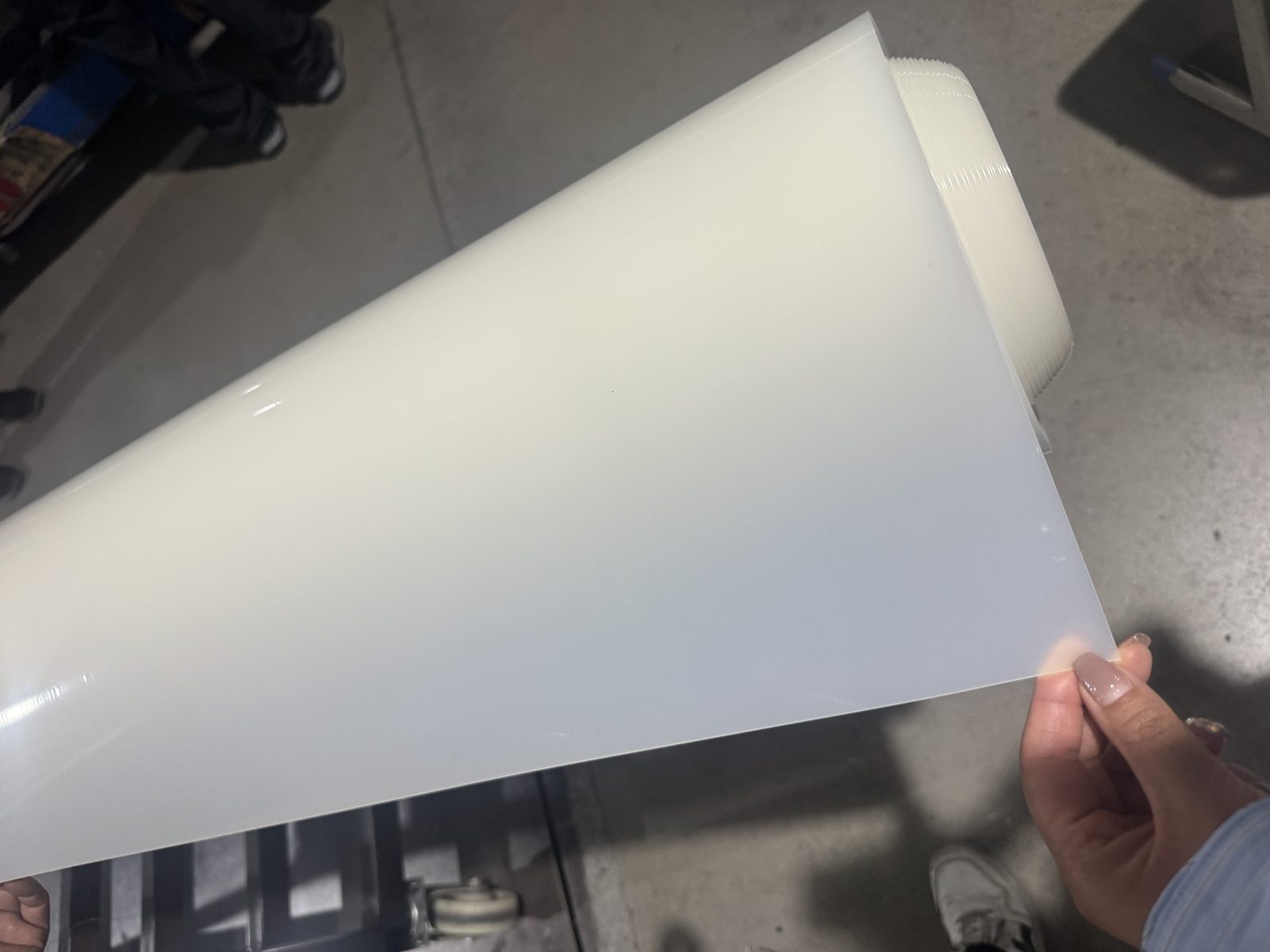
1. Thickness: what the five standard gauges are for
Our HDPE geomembrane is produced in 0.5, 0.75, 1.0, 1.5 and 2.0 mm. The thinner gauges are normally chosen for decorative ponds, small reservoirs and temporary containment, where the liner is protected from mechanical damage and the hydrostatic head is low.
1.0 mm and 1.5 mm cover most aquaculture ponds, irrigation reservoirs and canal lining. 1.5 mm and 2.0 mm are the usual choices for landfill base lining, tailings storage and any application where the liner will be exposed to leachate, sharp drainage aggregate or a significant head of water.
Thickness is verified to the relevant GB/T test method, and the mill test report for each batch states the measured values rather than only the nominal gauge.
2. Width and roll length decide the weld count
Our standard roll is 5.8 m wide and 50 m long. On a large reservoir, wide rolls mean fewer longitudinal seams: a 100 m long slope needs 18 panels at 5.8 m against 26 panels at 4 m. Every seam removed is a seam that does not need testing, and a place where leakage cannot start.
Roll length can be adjusted for project orders. If you are lining a long, narrow channel, a longer roll reduces end-to-end joins; if the site has restricted access, shorter rolls are easier to handle without a crane.
3. Surface finish: smooth or textured
Smooth liner is the default where the membrane lies on a prepared, stable surface. Textured liner is specified where the liner runs up a slope and the interface friction between membrane and soil, geotextile or concrete has to be raised to stop the panel sliding during installation and backfilling.
Both finishes use the same base resin and the same thickness range. The choice is about the slope angle and the interface, not about quality.
4. What to send with an inquiry
For a quotation we need the application, the thickness or the design requirement behind it, the area or tonnage, and the destination port. Drawings or a specification sheet help us check whether a textured finish, a composite build-up or a protection geotextile is needed. Technical data sheets in PDF are available on request.